Your basket is empty
Already have an account? Log in to check out faster.
Already have an account? Log in to check out faster.

"Read it again please!"
If you're a parent, you've heard this request countless times. Your child clutches their favorite book, eyes bright with anticipation, ready to hear the exact same story you just finished reading. Maybe you've already read it three times tonight. Maybe you've read it every single night for two weeks straight. You know every word by heart, can recite entire pages from memory, and honestly, you're a little tired of Timothy Acorn's journey through the Rolling Acorn Canyon.
But your child? They're just as excited as they were the first time.
This desire for repetition can feel puzzling, even frustrating, to adults. We crave novelty and variety. Once we know how a story ends, we're ready to move on to something new. But children's brains work differently, and their insistence on hearing the same book repeatedly isn't just a quirk. It's actually supporting crucial developmental processes that help them learn, grow, and make sense of their world.
Young children find comfort and security in predictability. In a world where so much is new, confusing, and beyond their control, knowing exactly what comes next in a beloved story provides a sense of mastery and confidence. They can anticipate the words, predict the plot turns, and experience the satisfaction of being right when events unfold exactly as expected.
This predictability isn't boring to children the way it is to adults. Instead, it's deeply satisfying. Each reading reinforces their understanding, builds their confidence, and allows them to notice new details they might have missed before. The story becomes a familiar friend, a reliable constant in their rapidly changing world.
Repetition also allows children to move beyond basic comprehension to deeper engagement. The first time hearing a story, children work hard just to follow the plot and understand what's happening. By the tenth reading, they've mastered the basic narrative and can focus on subtler elements like characters' emotions, cause and effect relationships, or connections to their own experiences.
Repeated reading is one of the most powerful tools for building vocabulary and language skills. When children hear the same book multiple times, they internalize new words in context, moving them from passive recognition to active vocabulary they can use themselves.
Research shows that children need to hear new words multiple times in meaningful contexts before those words become part of their working vocabulary. A single reading might introduce a word, but it takes repeated exposure for children to truly understand its meaning, remember it independently, and feel confident using it in their own speech.
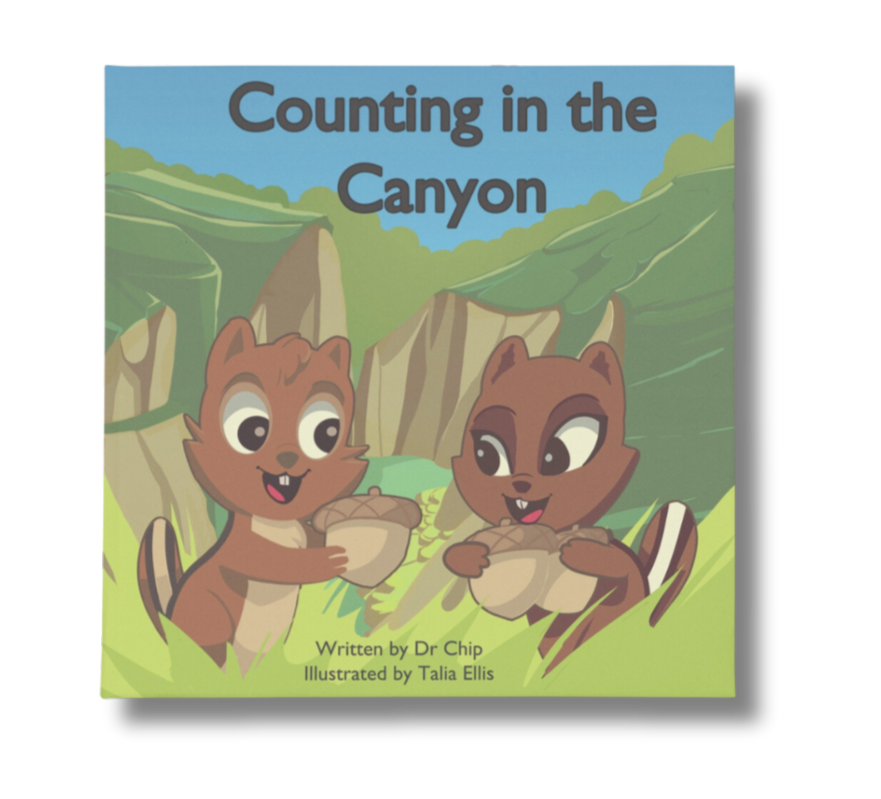
Consider a word like "canyon" in "Counting in the Canyon." The first reading might just plant the seed of this new word. By the fifth reading, your child understands that a canyon is a special type of place in nature. By the twentieth reading, they might spot a picture of a canyon in another book or use the word when describing a hill they climbed at the park.
Repeated reading also helps children internalize sentence structure and grammar patterns. They begin to understand how stories are constructed, how language flows, and how ideas connect. This implicit learning happens naturally through exposure, building language skills that will support both their spoken communication and later reading comprehension.
Books with rhythm and rhyme provide particular benefits through repetition. The predictable patterns help children recognize word families, understand syllables, and develop phonological awareness (all critical pre-reading skills). After multiple readings, children often "read" along, demonstrating their growing literacy skills even before they can decode words independently.
Each time children hear a familiar story, they understand it more deeply. Early readings focus on surface-level comprehension: What happened? Who are the characters? What comes next? Later readings allow for deeper thinking about why characters made certain choices, how events might have unfolded differently, or what lessons the story teaches.
This progression from literal to inferential understanding represents sophisticated cognitive development. Children move from simply absorbing information to actively analyzing and interpreting it. They begin asking questions: "Why did Timothy feel scared?" "What would have happened if he hadn't found the canyon?" "How is Timothy's experience like when we moved to our new house?"
Repeated reading also builds children's ability to make predictions and connections. After hearing "A New Home for Timothy Acorn" multiple times, children might connect Timothy's loose tooth to their own dental experiences, recognize similar feelings in themselves when facing change, or predict how other stories about transitions might unfold based on patterns they've learned.
Parents can enhance these benefits by asking different questions during repeated readings. Early readings might focus on basic plot points: "What happened to Timothy's home?" Later readings can explore deeper themes: "How do you think Timothy felt when he first saw the canyon?" This scaffolded questioning helps children develop increasingly sophisticated thinking skills.
Children often gravitate toward books that address emotions or situations they're currently processing. A child dealing with a new sibling might request books about babies repeatedly. A child nervous about starting preschool might choose books about school over and over. This isn't random. Children use stories as safe spaces to work through their own feelings and experiences.
Repeated reading of emotionally relevant books helps children process complex feelings they might not have words to express directly. Each reading offers another opportunity to think about the emotions in the story, connect them to personal experiences, and develop emotional literacy. The repetition provides multiple chances to understand and integrate difficult concepts at their own pace.
Books about transitions, like "A New Home for Timothy Acorn," often get requested repeatedly when children are facing their own changes. The familiar story provides a framework for understanding their experiences while the repetition offers comfort. Children know Timothy will find his way to a happy ending, and this predictability helps them feel more secure about their own uncertain situations.
Even books without obvious emotional content provide comfort through their predictability. In times of stress or change, children often request favorite books more frequently because the familiar stories provide stability when other aspects of life feel unpredictable. This is healthy coping behavior that deserves support rather than frustration.
Repetition is fundamental to how young children's memories work. Their brains are wired to learn through repeated exposure, building neural pathways that strengthen with each experience. When children hear the same story multiple times, they're not just memorizing words. They're developing memory strategies that will serve them throughout life.
You might notice your child beginning to "read" familiar books to themselves or their toys, reciting large portions from memory. This memorization isn't rote learning. It's meaningful memory work where children recall narrative structure, character development, and story language. These are the same skills they'll later use to remember and retell events from their own lives.
Pattern recognition develops through repetitive reading as well. Children learn that stories have beginnings, middles, and ends. They recognize cause and effect relationships. They understand that problems in stories get resolved. These patterns help them make sense not just of other stories but of real-life situations and narratives.
The ability to recognize patterns extends beyond story structure to language patterns, rhythm, and even visual patterns in illustrations. After multiple readings, children notice details in pictures they missed before, connecting visual information to the text in increasingly sophisticated ways.
Some children are naturally inclined toward repetition more than others, but all children benefit from it. Some need to hear stories many times before feeling secure with the content, while others might feel ready to move on more quickly. Both approaches are normal and valid.
Children with certain learning differences, including those on the autism spectrum or with language delays, often benefit particularly from repetitive reading. The predictability helps reduce anxiety while the repetition supports language acquisition and comprehension at a pace that works for their individual processing needs.
Even neurotypical children go through phases where they crave more or less repetition depending on what's happening in their lives. During stable, calm periods, they might enjoy more variety in books. During times of stress, transition, or rapid development, they often return to favorite books repeatedly, seeking the comfort of familiar stories.
The benefits of reading the same book repeatedly extend beyond early childhood. Children who experience extensive repetitive reading in their preschool years often become stronger readers later because they've internalized so much about how language and stories work.
They've heard thousands of sentences, absorbed countless vocabulary words, and learned implicitly about grammar, story structure, and narrative flow. This foundation makes the mechanics of learning to decode words easier because children already understand what reading is for and what stories should sound like.
Children who've experienced extensive repetitive reading often have strong comprehension skills when they begin reading independently because they already know how to think deeply about stories. They understand that stories have layers of meaning, that characters have motivations, and that events connect in logical ways.
The confidence children gain from mastering familiar stories through repetition also supports their willingness to tackle new challenges in reading. They've experienced the satisfaction of truly knowing a book inside and out, and this motivates them to work toward that same mastery with new texts.
Even understanding the benefits, reading the same book for the fortieth time can feel tedious. Here are strategies to make repeated readings more enjoyable for everyone:
Change your focus with each reading. One night, emphasize the rhythm and flow of language. Another night, discuss the illustrations in detail. A third reading might focus on emotional elements or connections to your child's life. This variety keeps you engaged while still providing your child the repetition they need.
Invite participation during familiar books. Once children know a story well, they can "read" along, fill in words, or predict what comes next. This active participation keeps both of you engaged while building their literacy skills.
Create rituals around beloved books. Maybe "Counting in the Canyon" is always read in your special reading corner. Perhaps "A New Home for Timothy Acorn" gets read during bedtime routines when transitions feel big. These rituals add meaning to the repetition.
Use repetitive reading as an opportunity for different kinds of interaction. After many readings, you might act out the story together, draw pictures inspired by it, or extend the narrative with your own "what happens next" storytelling. These extensions honor your child's love of the book while providing variety for you.
Remember that phases pass. The book your child requests constantly this month might be forgotten next month when a new favorite emerges. Embrace the current obsession knowing it's temporary while also recognizing that these beloved books often resurface later, becoming treasured throughout childhood.
Books that children request repeatedly often become launching pads for real-world exploration and learning. A child obsessed with "Counting in the Canyon" might become more interested in nature walks where you count discoveries together, extending the book's lessons into lived experiences.
Similarly, repeated reading of "A New Home for Timothy Acorn" can support conversations about change, bravery, and growing up. The familiar story provides a shared language for discussing difficult topics. You might reference Timothy when your child faces their own transitions, connecting the story to real-life situations in meaningful ways.
These connections between beloved books and real experiences create rich learning opportunities that extend far beyond the books themselves. The stories become tools for understanding the world, processing emotions, and building skills that transfer to many areas of life.
The books children request repeatedly often become touchstones throughout childhood and beyond. Many adults can still recite passages from beloved childhood books decades later. These stories become part of family lore, referenced during conversations and remembered with deep affection.
When you eventually read these same books to your own children, you might be surprised by how much you remember. The countless repetitions weren't wasted. They created lasting memories and associations that endure throughout life.
More importantly, the experience of having adults patiently read favorite books repeatedly teaches children that their interests and needs matter. It communicates that you value spending time with them even when the activity isn't particularly exciting for you. This message builds secure attachment and demonstrates unconditional love in concrete, daily ways.
Additional Resources
For more information about reading to young children and literacy development:
The next time your child requests their favorite book for what feels like the hundredth time, remember that you're not just rereading a story. You're supporting language development, building comprehension skills, providing emotional comfort, strengthening memory, and demonstrating love through patient presence. Every repetition serves a purpose, even when it doesn't feel that way to your adult brain craving novelty.
Looking for books that stand up to repeated reading? "Counting in the Canyon" and "A New Home for Timothy Acorn" were created with rich illustrations, layered storytelling, and emotional depth that reveal new dimensions with each reading. These books become more meaningful over time, supporting children's development through whatever phase of life they're navigating. When children ask to read them again and again, they're doing exactly what their growing brains need.