Your basket is empty
Already have an account? Log in to check out faster.
Already have an account? Log in to check out faster.

If you're a parent trying to help your child learn to read, you've probably encountered conflicting advice about phonics versus sight words. One teacher emphasizes sounding out words, while another sends home lists of words to memorize. The education system has swung back and forth between these methods for decades, leaving many parents confused and wondering what actually works.
The good news? Research is finally providing clear answers about how children's brains learn to read—and it's information every parent should know.
For years, the education system has oscillated between different reading philosophies. In the 1980s and 90s, many schools embraced "whole language" learning, which emphasized recognizing whole words and learning to read through exposure to books rather than explicit phonics instruction.
Then the pendulum swung back toward phonics-based instruction as research began showing that whole language approaches left many children struggling. Schools adopted phonics programs, only to shift again years later when new curriculum trends emerged. This constant back-and-forth has left parents and teachers confused—but the answer, backed by decades of brain science research, is becoming increasingly clear.
Recent research from the University of Chicago and other leading institutions has revealed fascinating insights about how children's brains actually learn to read. Brain imaging studies show that skilled readers develop strong phonological processing—the ability to connect letters with sounds and blend them into words.
According to PBS NewsHour's comprehensive investigation into reading instruction, schools across the United States are increasingly embracing what researchers call "the science of reading"—an evidence-based approach that prioritizes systematic phonics instruction. The data is compelling: children who receive explicit phonics instruction typically become stronger, more confident readers than those who primarily memorize whole words.
The National Reading Panel found that systematic phonics instruction produces significant benefits for children in kindergarten through 6th grade, with the strongest effects for kindergarteners and first graders. Children who learn to decode words through phonics develop skills they can apply to any new word they encounter, creating reading independence and confidence.
The University of Chicago research emphasizes that reading isn't a natural process like learning to speak. Reading is a cultural invention that requires explicit teaching. The brain must be trained to connect abstract symbols (letters) with sounds and meanings, which happens most effectively through systematic phonics instruction.
Phonics instruction teaches children the relationship between letters (graphemes) and sounds (phonemes). Children learn that letters represent sounds, and they practice blending these sounds together to read words.
This approach builds what reading researchers call "the alphabetic principle"—understanding that written letters represent spoken sounds in systematic ways. Once children grasp this concept, they have a powerful tool for tackling any word they encounter, even if they've never seen it before.
Systematic phonics instruction typically follows a developmental sequence, starting with simple consonant-vowel-consonant (CVC) words like "cat," "dog," and "sun." From there, instruction progresses to consonant blends, digraphs, vowel teams, and eventually multi-syllabic words. Each new pattern builds on previously learned skills.
Good phonics instruction is explicit and systematic. "Explicit" means teachers directly teach the letter-sound relationships rather than expecting children to figure them out independently. "Systematic" means instruction follows a logical sequence, introducing skills in an order that builds from simple to complex.
Sight words are words that readers recognize instantly without needing to sound them out. These are typically high-frequency words that appear constantly in children's books—words like "the," "and," "was," "said," and "are."
Some sight words follow regular phonics patterns and can be sounded out. However, many of the most common words in English are phonetically irregular—they don't follow the rules children learn through phonics instruction. For example, "said" doesn't sound like it's spelled, nor do words like "one," "once," "would," and "through."
Because these irregular high-frequency words appear so often in children's books, memorizing them as whole words can make early reading experiences smoother. When a child can instantly recognize "the" and "said," they can focus their decoding energy on the regular words in sentences.
However, the emphasis on sight words in some instructional approaches has gone too far. When children are expected to memorize hundreds of words as whole units without understanding the alphabetic principle, they lack the decoding strategies needed for reading independence.
While sight word knowledge has its place, phonics should form the foundation of reading instruction. Here's why:
First, phonics provides generative knowledge—skills that transfer to new situations. If a child knows 100 sight words, they can read those 100 words. But if a child has strong phonics skills, they can potentially read thousands of words they've never seen before.
Second, research consistently shows that children who receive systematic phonics instruction develop stronger word recognition, spelling, and reading comprehension skills. Brain imaging studies show that skilled readers activate brain regions associated with phonological processing, while struggling readers often over-rely on visual memory and context processing.
Third, phonics instruction benefits all children, but it's especially critical for children who struggle with reading. Children with dyslexia and other reading difficulties make significantly more progress with explicit, systematic phonics instruction.
Fourth, phonics builds spelling skills alongside reading skills. When children understand that words are composed of sounds represented by letters, they can apply this knowledge to both reading and spelling.
Children who rely too heavily on memorizing whole words often struggle when they encounter unfamiliar words. By third or fourth grade, children who haven't developed strong decoding skills often hit a "reading wall"—they can't keep up with increasingly complex text because they lack foundational skills.
The debate between phonics and whole language approaches has been called "the reading wars," and these wars have had real casualties—children who didn't receive effective reading instruction during critical developmental windows.
In the 1980s and 90s, when whole language approaches dominated many schools, reading scores stagnated or declined. Many children failed to become proficient readers and were often blamed for their struggles when they simply hadn't received the explicit instruction their brains needed.
The consequences of ineffective reading instruction extend far beyond elementary school. Children who don't become proficient readers by third grade are significantly more likely to drop out of high school and face employment challenges as adults.
While phonics should be the primary instructional approach, this doesn't mean sight words have no place in reading instruction. The most effective approach blends both methods strategically.
Children benefit from learning phonics rules systematically while also memorizing a core set of high-frequency irregular words. This combination allows children to decode regular words using their phonics skills while recognizing common irregular words instantly.
The key is proportion and sequence. Phonics instruction should be systematic, explicit, and comprehensive, making up the bulk of beginning reading instruction. Sight word instruction should be supplementary, focusing on truly irregular high-frequency words that children can't easily decode.
For example, when a child is first learning to read, they might decode simple words like "cat" and "run" using phonics skills while simultaneously memorizing truly irregular words like "the" and "I" as sight words. This allows them to read simple sentences by combining both skills.
Many Southern California libraries offer excellent early literacy programs that incorporate research-based reading instruction. The Los Angeles Public Library provides free phonics-based reading programs for children at various skill levels. Their early literacy specialists can recommend books and activities appropriate for your child's current reading stage.
The San Diego Public Library offers early literacy workshops for parents who want to support their children's reading development at home. These workshops often cover phonics basics, choosing appropriate books, and creating positive reading experiences. Many branches also offer story times specifically designed to build pre-reading skills through rhyming, singing, and alphabet activities.
Local bookstores throughout Southern California often host story times and reading events that expose children to quality literature while building excitement about reading. These experiences complement home reading instruction and help children associate reading with pleasure and discovery rather than just skill-building.
The Huntington Library in San Marino offers family programs that introduce children to books and reading in beautiful, inspiring settings. While not specifically reading instruction, these experiences build enthusiasm for literature and written language.
Many Southern California communities also have literacy nonprofits that provide free or low-cost tutoring for struggling readers. Organizations like Reading Partners operate in Los Angeles and San Diego, offering one-on-one tutoring that uses evidence-based methods including systematic phonics instruction.
Most children learn to read successfully with consistent, systematic instruction. However, some children struggle despite receiving quality phonics instruction and plenty of practice. If your child shows persistent signs of reading difficulties, don't hesitate to seek additional support.
Warning signs that might indicate a need for additional help include trouble remembering letter sounds even after repeated practice, difficulty blending sounds together to make words, persistent guessing based on first letters or pictures rather than decoding words, trouble with rhyming or other phonemic awareness tasks, or extreme frustration with reading-related activities.
These difficulties don't mean your child can't learn to read—they mean your child might need more intensive, specialized instruction. Early intervention makes a significant difference for children with reading challenges. Children who receive appropriate support early often catch up to their peers, while those who struggle for years without help often fall further and further behind.
Consider seeking evaluation from a reading specialist if your child isn't making expected progress. Many schools offer reading interventions, but you can also seek private evaluation and tutoring if needed. Educational psychologists can assess whether learning disabilities like dyslexia might be affecting your child's reading development.
Don't wait to see if your child will "grow out of it" or "catch up eventually." Reading difficulties rarely resolve without intervention. The brain's plasticity is greatest during early childhood, making elementary school the optimal time for intensive reading intervention. Waiting until middle school or high school makes remediation much more difficult.
Remember that struggling with reading doesn't reflect intelligence or overall ability. Many brilliant, successful adults struggled to learn to read as children. With appropriate instruction and support, children with reading difficulties can become skilled readers—they just need teaching that matches their learning needs.
For more information about teaching reading and literacy development:
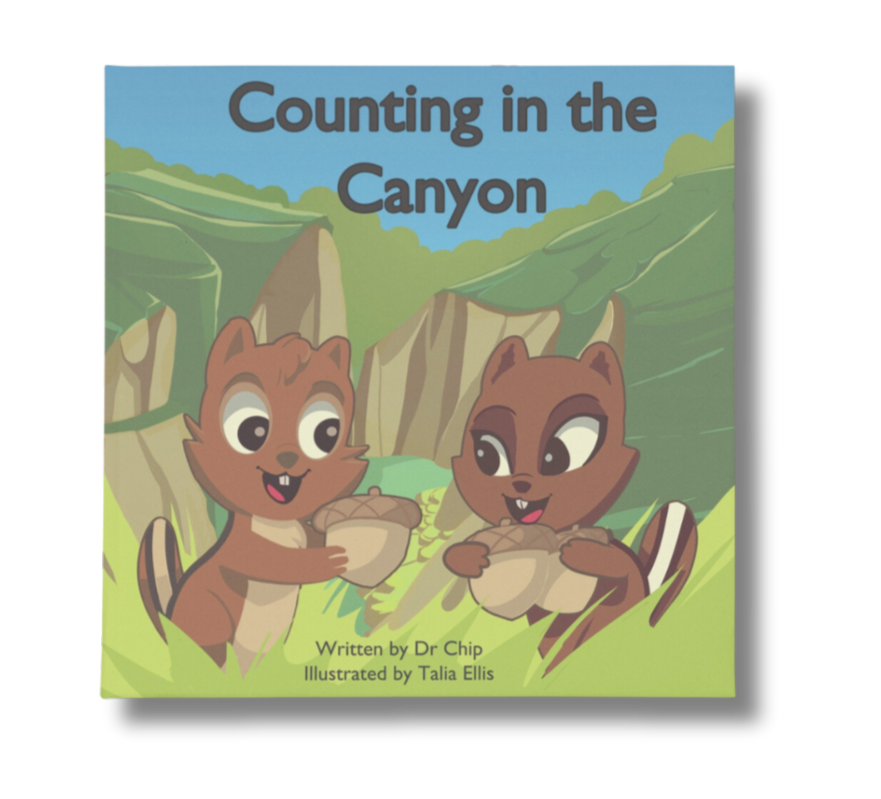
Looking for books that support early literacy development? "Counting in the Canyon" introduces letters, sounds, and counting in engaging ways that make learning feel like adventure rather than work. "A New Home for Timothy Acorn" provides rich vocabulary and story structure that support reading comprehension while addressing emotional themes children can relate to. These nature-themed books create positive reading experiences that build both skills and love of reading—the perfect combination for developing lifelong readers.