Your basket is empty
Already have an account? Log in to check out faster.
Already have an account? Log in to check out faster.

Reading to children is one of the most valuable activities parents can do to support language development, literacy skills, and school readiness. But there's a significant difference between simply reading words on a page and engaging in interactive reading that actively builds language skills. Interactive reading techniques transform passive listening into dynamic learning experiences that dramatically accelerate language development.
Research consistently shows that children whose parents use interactive reading techniques develop larger vocabularies, stronger comprehension skills, and better communication abilities than children who experience only traditional read-aloud sessions. The good news? These techniques are simple to implement and actually make reading more enjoyable for both parents and children.
Interactive reading, sometimes called dialogic reading, shifts the adult's role from narrator to conversation facilitator. Instead of simply reading text while children listen passively, interactive reading involves asking questions, encouraging predictions, making connections, and engaging children as active participants in the storytelling experience.
This approach recognizes that language develops through use, not just exposure. Children need opportunities to practice speaking, formulating thoughts, and expressing ideas, not just opportunities to hear language. Interactive reading provides structured, supportive contexts for this essential practice.
The most effective interactive reading happens when adults follow children's interests and developmental levels, adjusting questions and prompts to match what children are ready to learn. This responsive approach keeps children engaged while providing appropriate challenges that promote growth.
One of the most effective frameworks for interactive reading is the PEER sequence, which stands for Prompt, Evaluate, Expand, and Repeat. This simple structure provides a roadmap for turning any book into an interactive learning experience.
Prompt the child to say something about the book. This might be asking what they see in an illustration, what they think will happen next, or how a character might be feeling. For younger children, prompts might be simple: "What's that?" while pointing to an object in the picture. For older children, prompts can be more complex: "Why do you think Timothy felt scared about the new canyon?"
Evaluate the child's response by acknowledging what they said and assessing whether it's accurate or needs clarification. This isn't about correcting harshly but about gently guiding understanding. If a child calls a chipmunk a squirrel, you might say, "It does look similar to a squirrel! This is actually a chipmunk. Chipmunks have stripes on their backs."
Expand on the child's response by adding more information, introducing new vocabulary, or making connections. If a child says "The chipmunk is sad," you might expand: "Yes, Timothy Acorn feels sad because his home was destroyed. He's also feeling worried about where he'll live now."
Repeat by asking the child to incorporate the new information you've provided. "Can you tell me how Timothy is feeling?" This repetition reinforces learning and gives children practice using new vocabulary and concepts.
This sequence might sound formal, but in practice it flows naturally once you understand the framework. It becomes second nature with practice, transforming ordinary reading sessions into rich language-building experiences.
The types of questions you ask during reading directly influence which language and cognitive skills children develop. Varying question types ensures comprehensive development across multiple areas.
Completion prompts work particularly well with repetitive or rhyming books. Pause before key words and let children fill in the blank: "Counting from one to ten is a fun experience in the Rolling Acorn..." and let your child say "Canyon!" This technique builds memory, reinforces vocabulary, and helps children feel successful.
Recall questions ask children to remember what happened earlier in the story or in previous readings. "What happened to Timothy's home?" or "Where did Timothy find the owl family?" These questions build memory skills and help children understand narrative sequence.
Open-ended questions encourage children to think beyond simple right or wrong answers. "What do you think Timothy should do now?" or "How would you feel if you were Timothy?" These questions develop critical thinking, empathy, and the ability to express complex ideas.
Wh-questions (who, what, where, when, why) build different comprehension skills. "Who helped Timothy?" focuses on characters. "Why did Timothy explore the canyon?" addresses motivation and cause-effect relationships. Varying these question types ensures well-rounded comprehension development.
Distancing prompts help children connect stories to their own lives: "Have you ever felt scared like Timothy?" or "When have you had to be brave?" These connections make stories personally meaningful while building abstract thinking skills.
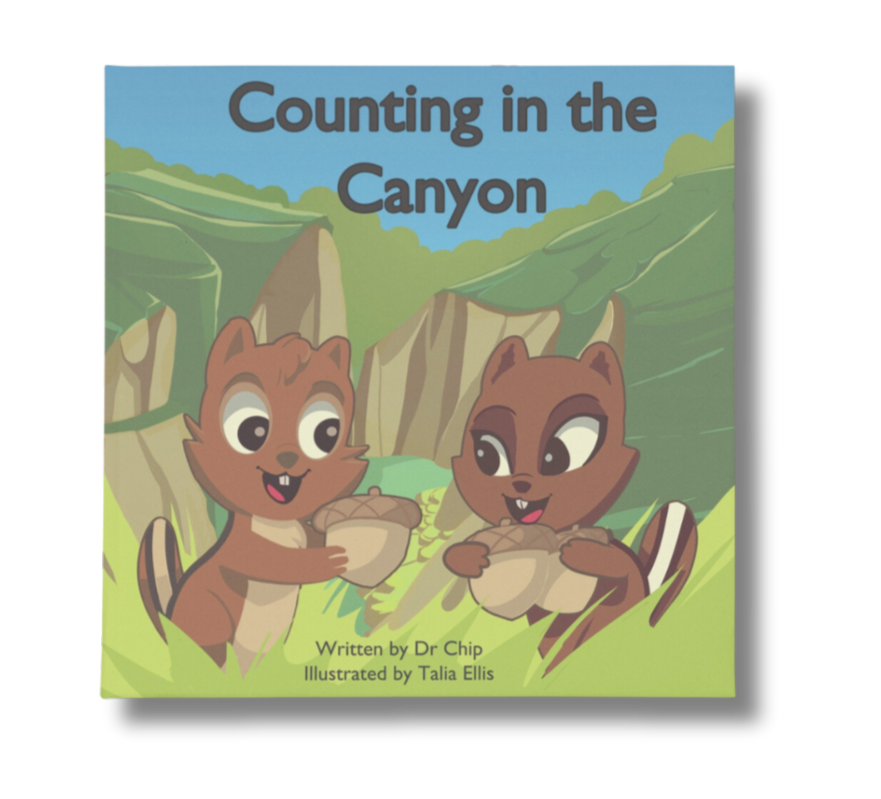
Illustrations provide rich opportunities for language development that many parents overlook. Detailed pictures in books like "Counting in the Canyon" or "A New Home for Timothy Acorn" contain far more information than the text alone, offering countless conversation starting points.
Encourage children to study illustrations by asking what they notice. Point to interesting details and introduce vocabulary: "Look at Timothy's whiskers. They're so long! Whiskers help chipmunks feel things around them." This incidental vocabulary building happens naturally through picture discussion.
For younger children, label objects in pictures to build basic vocabulary. For older children, discuss more abstract elements like colors, emotions shown in facial expressions, or background details that add to the story. "Look at the colors in the canyon. What time of day do you think it is based on these colors?"
Compare illustrations across pages: "On this page, Timothy looks worried. On this page, he looks curious. What changed?" This builds visual literacy alongside verbal language skills.
Allow children to linger on pages that interest them even if it means not finishing the book. Deep exploration of a few pages often provides more language learning than rushing through an entire book without discussion.
Encouraging children to predict what will happen next builds critical thinking and comprehension skills. Before turning each page, ask what they think might happen. "Timothy just discovered the canyon. What do you think he'll find there?"
There are no wrong predictions. Even when children's guesses don't match what actually happens, the thinking process itself builds important skills. After seeing what actually occurs, discuss predictions: "You thought Timothy would find a cave, but he found an owl family instead. That was a good guess though!"
Help children make inferences by reading between the lines. The text might not explicitly state that Timothy is brave, but his actions demonstrate courage. "The story doesn't say Timothy is brave, but what did he do that shows bravery?" This teaches children that meaning comes from more than just stated words.
Model inference-making yourself: "I notice Timothy's ears are standing up straight. That makes me think he's alert and listening carefully. What do you think?" This demonstrates the thinking process children should develop.
Interactive reading provides perfect opportunities to introduce new vocabulary in meaningful contexts. When you encounter unfamiliar words in stories, explain them using child-friendly definitions and examples.
Use new vocabulary multiple times in different contexts during the reading session. If you explain that "canyon" means a deep valley with steep sides, use the word several more times: "The canyon is beautiful," "Timothy explored the canyon," "What colors do you see in the canyon?" Repetition in varied contexts helps words stick.
Connect new vocabulary to children's experiences: "A canyon is like the big hills at the park, but much bigger and deeper. Remember when we climbed that hill and looked down? A canyon would be much, much deeper than that."
Don't oversimplify language to match children's current vocabulary. Children learn new words through exposure to slightly more advanced language than they currently use themselves. Books naturally provide this "one level up" language when adults don't over-simplify during reading.
Interactive reading should feel like a conversation, not a quiz. Balance questions with moments of shared enjoyment, letting children's natural curiosity guide some of the interaction.
Invite children to "read" familiar books to you, even before they can decode words. They'll use pictures to retell the story in their own words, building narrative skills and confidence. Celebrate their retellings without correcting every detail. The practice of constructing narratives matters more than perfect accuracy.
Act out stories together after reading. Take on different character voices, create simple props from household items, or simply use gestures and movements to bring the story to life. This multisensory engagement reinforces comprehension while making stories memorable.
Create extension activities based on books. After reading "Counting in the Canyon," go on a nature walk and count discoveries together. After "A New Home for Timothy Acorn," discuss times your child has been brave or adapted to changes. These extensions build connections between books and real life.
Interactive reading techniques should evolve as children grow. Infants and young toddlers benefit from simple labeling: "Ball! See the red ball?" while pointing to pictures. Even these simple interactions build vocabulary and the foundation for later literacy.
Two and three-year-olds can handle slightly more complex interactions like completion prompts in predictable books and simple recall questions. "What did we see on the last page?" or "Can you point to the chipmunk?"
Preschoolers (ages 3-5) are ready for the full range of interactive techniques including predictions, inferences, and complex vocabulary building. They can handle longer discussions about character motivations and story themes.
Early elementary children (ages 5-7) can engage with even more sophisticated questions about story structure, author's purpose, and literary elements like symbolism or metaphor. They can compare books, identify patterns across stories, and discuss how stories make them feel and why.
Regardless of age, watch for signs that children are losing interest or becoming frustrated. If questions feel like work rather than play, scale back and return to simply enjoying the story together. The goal is building positive associations with books alongside language skills.
The most powerful language development happens through consistent practice over time. Establishing regular interactive reading as part of daily routines ensures children receive ongoing language-rich experiences.
Bedtime routines provide natural opportunities for interactive reading when children are calm and receptive. Morning reading can start the day with connection and language practice. Even brief reading sessions during transitions throughout the day contribute to language development.
Create a welcoming reading corner where interactive reading feels special and enjoyable. When reading space feels comfortable and inviting, children associate reading with positive feelings that motivate engagement.
Model enthusiasm for reading and genuine curiosity about stories. Children pick up on adult attitudes. When you're truly engaged and interested in books, children mirror that engagement.
Don't worry about implementing every technique in every reading session. Even incorporating one or two interactive elements transforms passive read-alouds into active learning experiences. Over time, these techniques become natural habits that don't require conscious effort.
Children who experience regular interactive reading develop stronger language skills that support success across all academic areas. The vocabulary, comprehension strategies, and communication skills built through interactive reading provide foundations for reading independence, writing development, and overall academic achievement.
Perhaps more importantly, interactive reading builds relationships. The conversations, shared discoveries, and collaborative meaning-making create connections between parents and children that extend far beyond language development. These shared experiences become treasured memories while building the communication patterns that support lifelong close relationships.
Additional Resources
For more information about interactive reading and language development:
Interactive reading transforms story time from a passive listening experience into dynamic language learning. By asking questions, encouraging predictions, expanding on children's responses, and making connections, parents provide the rich language experiences children need for optimal development. These techniques work with any book but are particularly effective with thoughtfully created stories that invite conversation and connection.
Looking for books that naturally invite interaction and conversation? "A New Home for Timothy Acorn" and "Counting in the Canyon" were created with rich illustrations, emotionally resonant themes, and layered content that support interactive reading techniques. These books provide endless opportunities for vocabulary building, comprehension practice, and meaningful conversations that strengthen both language skills and parent-child bonds.